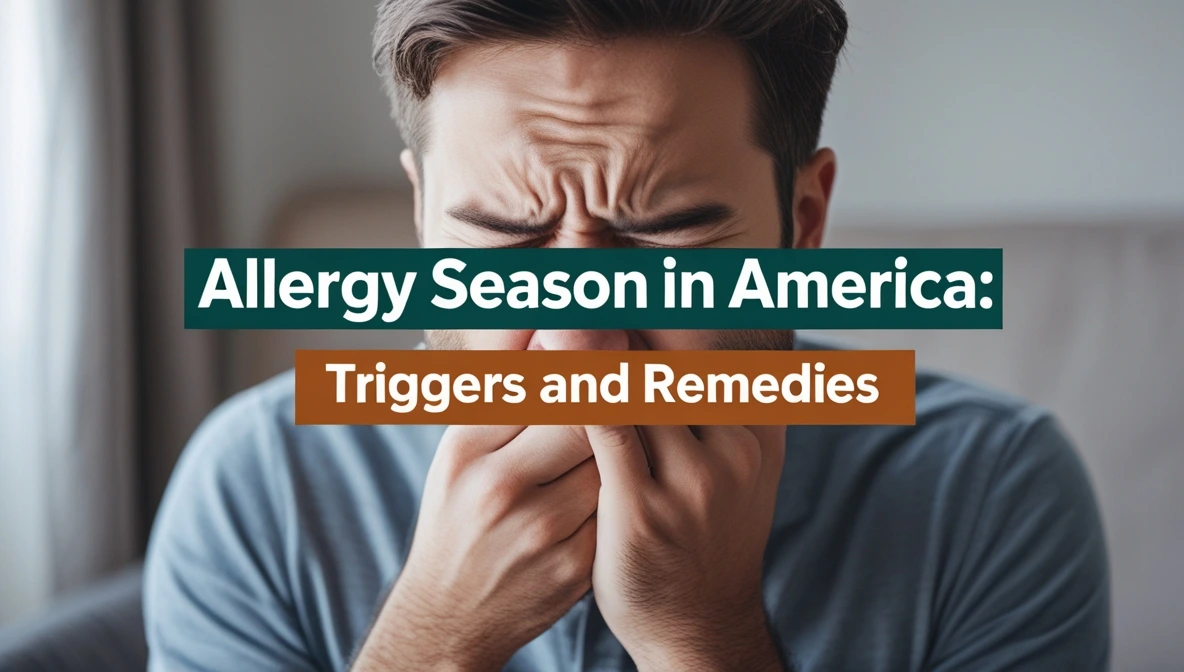
If you experience sneezing and coughing at specific times of the year, you may have seasonal allergies. However, occasional allergies aren’t something you just have to live with, and it’s important to know about allergy season remedies.
Thank you for reading this post, don't forget to subscribe!People with seasonal allergies (also known as hay fever or allergic rhinitis) react to pollen from plants. Sneezing, coughing, a runny or stuffy nose, and itching of the eyes, nose, mouth, and throat are all possible symptoms.
Why Is Allergy Season So Bad in America?
Climate change causes earlier, longer, and more severe allergy seasons for millions of people in the United States.
As the climate gets warmer, many people are becoming concerned about spring allergies. According to the CDC, more than one-third of adults and one in every five children suffer from seasonal allergies.
Unfortunately, allergy seasons in recent years have been particularly severe, resulting in around 3.8 million missed work and school days per year.
Climate Change Is Driving Longer, More Intense Pollen Seasons
Pollen seasons get longer and more intense as a result of climate change because of CO₂ pollution that traps heat.
According to a 2022 study, the United States may see a 200% rise in pollen output by the end of this century if CO₂ pollution rates remain high.
For those who suffer from respiratory conditions like asthma, especially youngsters, longer and more intense pollen seasons might have detrimental effects.
Common Seasonal Allergy Symptoms to Watch For
Seasonal allergies can be more than a minor irritation. Symptoms of seasonal allergies include: –
-
- A stuffy or runny nose.
- Sneezing.
- Itchy eyes and nose.
- Sore throat.
- Cough.
- Dark circles beneath the eyes.
- Lack of sleep causes fatigue and poor concentration at school.
- A rise in ear and sinus infections.
- Increased asthma symptoms.
- Behavioral difficulties resulting from discomfort and a lack of sleep.
Effective Allergy Season Remedies for Immediate Relief
Avoiding triggers, especially for people with seasonal symptoms, is suggested; however, it is not always possible. This may necessitate considerable lifestyle adjustments that the patient may not be willing to make.
Medicinal Allergy Season Remedies
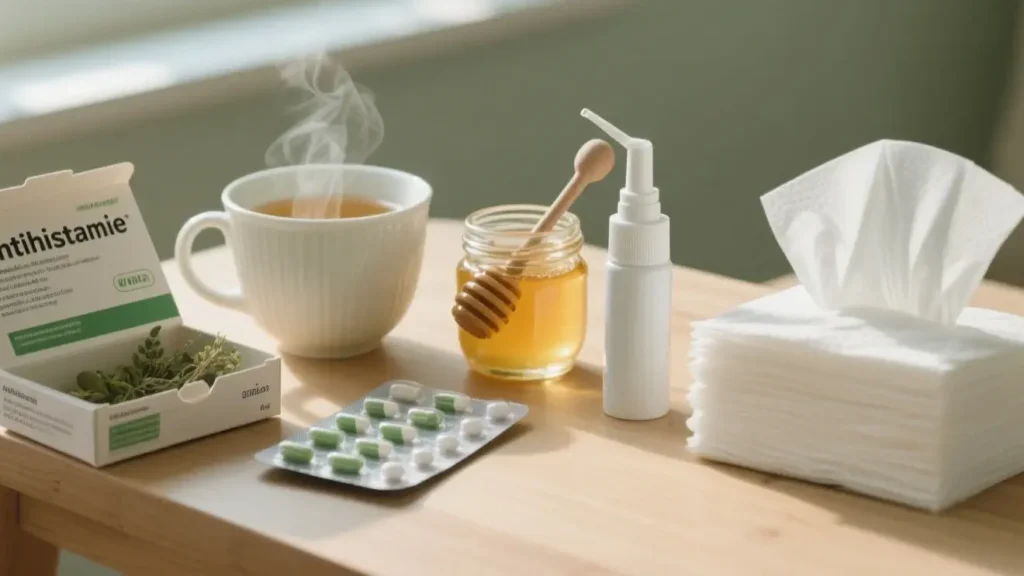
Antihistamines, intranasal steroids, leukotriene receptor antagonists (LTRAs), and immunotherapy are the potential pharmacological treatments.
1. Intranasal Sprays
Intranasal corticosteroid sprays can be used alone or in combination with oral antihistamines.
They have been proven to be more effective than antihistamines in lowering nasal inflammation.
In the United States, common nasal sprays include beclomethasone, budesonide, fluticasone propionate, mometasone furoate, and triamcinolone acetonide.
2. Intranasal Antihistamines
Intranasal antihistamines, such as azelastine, have a faster onset and are more effective than oral antihistamines in treating nasal symptoms.
They are suggested as first- or second-line treatments for allergic rhinitis and can be used with topical nasal steroid sprays for a synergistic effect.
3. Oral Steroids
Oral and injectable steroids have been demonstrated to reduce allergic rhinitis symptoms, but their considerable systemic adverse effects make them unsuitable for frequent treatment.
4. Antihistamines
Seasonal allergy symptoms can be effectively controlled with both first- and second-generation antihistamines.
Nonetheless, first-generation antihistamines can be quite sedative due to their ability to pass the blood-brain barrier.
Second-generation antihistamines exhibit higher H1 selectivity, less sedation, and longer half-lives (12 to 24 hours) than first-generation antihistamines.
5. Chromones
Also known as mast cell stabilizers, they limit the release of histamines into the bloodstream, decreasing inflammation and allergies.
6. Leukotriene Receptor Antagonists
These chemicals block leukotrienes that are critical to the inflammatory response in the airways.
7. Immunotherapy
Subcutaneous immunotherapy (SCIT) and sublingual immunotherapy (SLIT) are typical treatments.
Weekly incremental dosages are administered for 6 to 8 months, followed by maintenance doses for 3 to 5 years.
8. Decongestants
Oral decongestants like pseudoephedrine can help relieve symptoms, but they are not suggested for long-term usage due to their negative effects.
Intranasal decongestants, like xylometazoline, are alpha-agonists that cause vasoconstriction in the nasal tissue.
9. Saline Nasal Irrigation
You can use a saline solution to remove mucus, allergies, germs, and other irritants from the sinus and nasal canals.
Nasal saline can be used in conjunction with other therapeutic options. Isotonic solutions are better for adults; however, hypertonic solutions may be more effective in youngsters.
Long-Term and Natural Allergy Season Remedies
Complementary natural allergy season remedies and approaches (along with medications) can be classified by how the therapy is received or given, which can be:
-
- Nutritional: for example: specific diets, nutritional supplements, herbs, probiotics, and microbial-based treatments.
- Psychological: meditation, hypnosis, music therapy, and relaxation therapy.
- Physical treatments: include acupuncture, massage, and spinal manipulation.
Combinations of psychological and physical (e.g., yoga, tai chi, dance treatments, some kinds of art therapy) or psychological and nutritional (e.g., mindful eating).
Nutritional Approaches
1. Butterbur
A 2007 study on the herb butterbur for allergic rhinitis found that butterbur may be beneficial.
2. Probiotics
Probiotics have been studied by researchers for their beneficial effects as one of the allergy season remedies.
It is possible that some probiotics are beneficial while others are not.
3. Honey
It has been suggested that eating honey may help to alleviate pollen allergies since honey contains trace amounts of pollen and may help people develop a tolerance to it.
Another hypothesis is that honey acts as an antihistamine or anti-inflammatory.
4. Vitamin C
According to a 2023 study review, vitamin C has anti-allergy properties and can help with allergic, and immune-system disorders. This is due to the anti-inflammatory and antioxidant properties of vitamin C.
5. Quercetin
Quercetin is an antioxidant flavonoid found in numerous plants (such as apples, berries, black tea, and broccoli).
According to research from 2020, quercetin may have anti-allergic and antihistamine characteristics.
Psychological and Physical Approaches
A 2015 review on acupuncture for allergic rhinitis revealed evidence that this technique may be beneficial as one of the natural allergy season remedies.
Rinsing the sinuses with a neti pot (an Oriental device) or other devices, such as nebulizers or spray, pump, or squirt bottles, may be an effective supplement to conventional treatment for allergic rhinitis.
Home Defense Guide to Reduce Indoor Allergens
Avoiding the substances that cause seasonal allergies appears to be one of the most important methods to deal with them.
Nonetheless, a variety of home-based tactics and items will be beneficial. Here are a few to try:
-
- Wash bedding weekly in hot water (60°C or higher). Use anti-allergy coverings for your mattress and pillows.
- Vacuum on a regular basis with a HEPA filter.
- Purifying the air with air purifiers, including portable devices and whole-house air filters.
- Use a wet cloth to keep surfaces clean of dust.
- Use natural cleaners like vinegar, lemon, or borax whenever feasible.
- Keep pets off furniture or provide them with their own washable beds.
- Keeping your home’s humidity around 30 to 50 percent on a consistent basis reduces the growth of moisture-loving dust mites and mold.
When to See a Doctor for Your Allergy Symptoms
You could try to schedule an appointment if:
-
- You have symptoms such as a runny or stuffy nose, cough, or watery eyes that continue for more than three months and interfere with your ability to work or sleep.
- They are interfering with your ability to carry out daily tasks.
- You’ve tried over-the-counter medications and still require more assistance.
- You frequently develop sinus infections, headaches, a stuffy nose, and ear infections.
- You are experiencing severe asthma warning signs, such as trouble breathing or frequent wheezing and coughing, particularly at night or after exercise.
- You have further medical conditions such as heart disease, thyroid illness, diabetes, glaucoma, high blood pressure, an enlarged prostate, liver disease, or renal disease. If you have allergies, treating them with over-the-counter medications may not be safe. Consult your doctor before taking them.
- Children and the elderly who suffer from allergies should always consult with a doctor before beginning treatment.
Reference
- Akhouri, S., & House, S. A. (2022). Allergic Rhinitis. Retrieved from PubMed.
- American Lung Association. (2025). An Expert Explains: Why Are My Allergies Getting Worse? Retrieved from Lung.org.
- Aw Yong, P. Y., Islam, F., Harith, H. H., Israf, D. A., Tan, J. W., & Tham, C. L. (2021). The Potential Use of Honey as a Remedy for Allergic Diseases: A Mini Review. Frontiers in Pharmacology.
- K.-C., Berger, M., Klimek, L., Pfaar, O., Werchan, B., Werchan, M., & Zuberbier, T. (2021). Nonpharmacological measures to prevent allergic symptoms in pollen allergy- From the NIH.
- CDC. (2025, May 21). More Than a Quarter of U.S. Adults and Children Have at Least One Allergy. Retrieved from NCHS Pressroom.
- D’Amato, G., Murrieta-Aguttes, M., D’Amato, M., & Ansotegui, I. J. (2023). Pollen respiratory allergy: Is it really seasonal? World Allergy Organization Journal.
- Eggleston, P. A. (2005). Improving indoor environments: reducing allergen exposures. The Journal of Allergy and Clinical Immunology.
- Ghalibaf, M. H. E., Kianian, F., Beigoli, S., Behrouz, S., Marefati, N., Boskabady, M., & Boskabady, M. H. (2023). The effects of vitamin C on respiratory, allergic, and immunological diseases: an experimental and clinical-based review. Inflammopharmacology.
- Indoor Allergens. (1993). Washington, D.C.: National Academies Press.
- Jafarinia, M., Sadat Hosseini, M., Kasiri, N., Fazel, N., Fathi, F., Ganjalikhani Hakemi, M., & Eskandari, N. (2020). Quercetin has the potential to affect on allergic diseases. Allergy, Asthma & Clinical Immunology, 16(1).
- Lim, S., Jeong, I., Cho, J., Shin, C., Kim, K.-I., Shim, B.-S., … Kim, B. (2021). The Natural Products Targeting Allergic Rhinitis: From Traditional Medicine to Modern Drug Discovery. Antioxidants, 10(10), 1524.
- nadolpho. (n.d.). When To See An Allergist – Treat and Prevent Allergies | ACAAI Patient. Retrieved from the ACAAI Public Website.
- Natural antihistamines: Top 5 remedies for allergies. (2018, October 8). Retrieved from medicalnewstoday
- NHS. (2022, August 2). Allergies. Retrieved from NHS.
- Philadelphia, T. C. H. of. (2015, April 13). Seasonal Allergies: Keeping Symptoms in Check.
- Seasonal Allergies at a Glance. Retrieved from NCCIH.
- National Institute of Environmental Health Sciences. Pollen. Retrieved from the National Institute of Environmental Health Sciences.