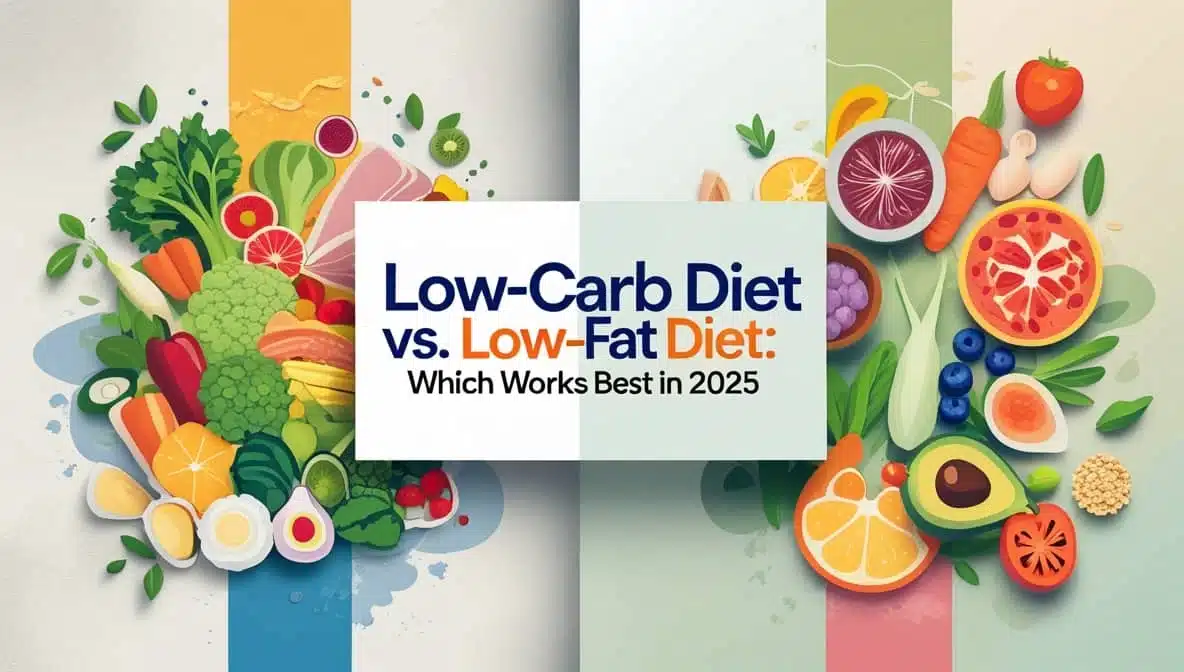
People who are looking for the best approach to lose weight and maintain their health are still interested in the low-carb diet vs. low-fat diet controversy. Although each has advantages, the decision between them is based on your lifestyle, personal objectives, and physical reaction. You can make a more intelligent and sensible dietary choice if you are aware of their distinctions.
Thank you for reading this post, don't forget to subscribe!If you’re exploring other nutrition strategies, check our guide on iron-rich foods and how nutrients support healthy metabolism.
What Is a Low-Carb Diet and How Does It Support Weight Loss
To compare a low-carb diet vs. a low-fat diet, you need to know the details of each diet and how it works.
A low-carb diet limits the quantity of carbs you eat, usually by cutting back on or avoiding items like rice, bread, pasta, sugar, and starchy vegetables. Rather, it prioritizes non-starchy vegetables, healthy fats, and protein.
Consuming carbs, particularly highly processed ones like white bread and white rice, causes blood sugar levels to rise rapidly, which causes the pancreas to release insulin.
Low-carb diets are also linked with better blood sugar control — see how this compares to prediabetes symptoms in females to understand early metabolic warning signs.
It’s worth mentioning that very low-carb diets are typically ketogenic, which means they severely restrict carbohydrate intake in order to induce ketosis, a metabolic state in which your body burns fat for energy rather than carbohydrates.
How Do Low-Carb Diets Help People Lose Weight?
1. Lower Insulin Levels
Your body releases insulin, a hormone that aids in fat storage, when blood sugar levels rise due to carbohydrate consumption. Insulin is lowered by a low-carb diet, which might encourage fat burning and decrease fat accumulation.
Maintaining healthy insulin sensitivity also helps prevent cardiovascular complications — read more about early warning signs of heart disease.
2. Control of Appetite
Since protein and fat are more filling than carbohydrates, many people say they feel less hungry when following a low-carb diet.
3. Quicker Weight Loss at First (Water Weight)
Your body burns up glycogen, which is a sort of stored carbohydrate in the muscles and liver, when you cut back on carbohydrates. Since glycogen binds to water, its loss initially causes a significant decrease in water weight.
4. Improved Fat Loss
When carbs are low, your body may enter a state known as ketosis, in which it burns fat for energy rather than glucose (derived from carbs). This is the foundation of the ketogenic (keto) diet, which is an extreme version of low-carb eating. In the context of a low-carb diet vs. a low-fat diet, many individuals experience faster initial fat loss on a low-carb diet due to reduced insulin levels and increased fat oxidation.
5. Controlled Blood Sugar Levels
Fewer carbs result in fewer blood sugar rises and falls, which can help with cravings and emotional eating.
What Is a Low-Fat Diet and How Does It Affect Metabolism
Low-fat diets were once the primary method of weight loss, but they are now less common. Theoretically, a low-fat diet is a sort of eating plan that restricts the quantity of fat consumed, particularly saturated and trans fats, while emphasizing carbs and lean protein instead. It is commonly used to lose weight, improve heart health, and manage cholesterol.
These diets can influence how your body absorbs fat-soluble vitamins like D and K — see more on vitamin D deficiency symptoms.
What Is the Low-Fat Diet?
Fat consumption is typically lowered to less than 30% of total daily calories.
Saturated fats (found in red meat, butter, and full-fat dairy) and trans fats (found in processed foods) are particularly scarce.
Focus is on:
Fruits, vegetables, whole grains, lean proteins (e.g., poultry, fish, lentils), and low-fat or fat-free dairy.
In comparing the low-carb diet vs. the low-fat diet, it’s clear that the low-fat approach leans more heavily on plant-based and starchy foods, while the low-carb strategy limits these in favor of fats and proteins.
How a Low-Fat Diet Impacts Metabolism
1. Caloric reduction
Fat is the most calorie-dense macronutrient (9 calories per gram, compared to 4 for carbohydrates and protein).
Reducing fat often reduces overall calorie intake, which can result in weight loss and improved metabolism over time.
2. Increased carbohydrate intake
Many low-fat diets are strong in carbohydrates, particularly complex carbs found in whole grains and vegetables.
This can elevate insulin levels, which may aid or block fat reduction depending on the type of carbs consumed.
3. Potential reduction in fat-burning hormones
Extremely low-fat diets can have an effect on hormones that regulate metabolism and hunger, such as testosterone and leptin.
Fats are required to absorb fat-soluble vitamins (A, D, E, and K) and to promote hormone production.
Related — How different diet plans affect hormone and metabolic health

Benefits and Drawbacks of Low-Carb vs. Low-Fat Diets
Many of the benefits and drawbacks of both methods depend on how the body adjusts, what foods are omitted, and how sustainable they are, because they both limit a major macronutrient (fat or carbohydrates). The low-carb diet vs. low-fat diet comparison ultimately comes down to individual goals, preferences, and health conditions.
Low-Carb Diet
Benefits include the following: –
- Faster short-term weight loss: Many studies show low‑carb diets lead to more weight loss in the first 3–6 months compared to low‑fat diets.
- Reduces abdominal (visceral) fat.
- better appetite control.
- Improves triglycerides and HDL (“good” cholesterol).
- Helps with blood sugar and insulin control.
Drawbacks include the following: –
- Hard to sustain long-term.
- May cause low fiber and nutrient deficiencies.
- For some, the “keto flu” is a side effect of adjustment.
- There may be an increase in LDL (or “bad”) cholesterol in certain people.
- Long-term health effects are still debatable.
Low-Fat Diet
Benefits include the following: –
- Legumes, cereals, and fruits are simpler to include.
- Easier to include fruits, grains, and legumes.
- Better LDL reduction (if fat is mostly plant-based).
- Often easier to stick with.
- Supports heart health if done with whole foods.
- It can still promote fat loss (especially with plant-based foods).
Drawbacks include the following: –
- Slower weight loss in the beginning.
- May be less in control of their hunger.
- Some low-fat products are high in sugar and processed carbs.
- It may not be as effective in regulating blood sugar.
Which Diet Works Best for Weight Loss in 2025
Weight loss is possible with both diets, but adherence and personal preferences play a major role in success. Regardless of the diet you follow, maintaining balanced nutrient intake is key. Low zinc or vitamin deficiencies can affect metabolism — explore zinc deficiency symptoms in females.
Low-carb diets may have a minor advantage in the near run (the first six to twelve months), according to recent 2025 studies, because:
- Diminished appetite.
- Better regulation of blood sugar.
- Greater loss of water weight at first.
However, when calories are kept under control, low-fat and low-carb diets have comparable weight loss outcomes over an extended period of time (one year or more).
The difference between low-carb and low-fat diets tends to decrease or vanish over a period of 12+ months, indicating that overall calorie intake and adherence (following the plan) are probably more important than just the macronutrient composition.
In summary, there is no one-size-fits-all answer to the controversy surrounding low-carb vs. low-fat diets; both have advantages, but the optimal choice will depend on lifestyle, long-term viability, and health markers.
Reference
- Bhandari, P., & Sapra, A. (2023, February 6). Low Fat Diet. PubMed; StatPearls Publishing.
- Low Carb vs. Low Fat Diets — Which Is Best for Weight Loss? (2020, July 28). Healthline.
- A Low-fat diet compared to a low-carb diet. (2021, February 8). National Institutes of Health (NIH).