Who does not strive for a diet that effectively supports health and sustains energy throughout life? This pursuit of optimal nutrition becomes even more crucial for individuals with heart conditions, who must adhere to stringent dietary protocols to safeguard cardiovascular health. Have you heard of the Mediterranean diet for heart health? If you are not familiar with it, this article will explain the main principles of the diet, its significance, and how it enhances heart health. Discover how this research-backed eating pattern can enhance heart health.
Thank you for reading this post, don't forget to subscribe!
What Is the Mediterranean Diet and Why Is It Popular?
The Mediterranean diet for heart health is a time-honored dietary approach inspired by the food habits of countries bordering the Mediterranean Sea, such as Greece, Italy, Spain, and Turkey.
It emphasizes fresh, nutrient-rich plant-based foods, such as vegetables, fruits, whole grains, legumes, nuts, and seeds, while incorporating healthy fats, particularly extra-virgin olive oil.
The diet includes moderate amounts of fish, poultry, and dairy, while limiting the consumption of meat and processed foods.
Furthermore, the Mediterranean diet is popular due to the following:
It emphasizes balance, moderation, and social connection, with a focus on overall diet quality.
It supports cardiovascular health and promotes overall well-being.
It is linked to longer life expectancy and healthier aging.
Nutrition experts consistently rank it among the top diets worldwide.
It is extensively studied, with strong scientific evidence confirming its health benefits.
It is flexible and adaptable, making it easy to follow across different lifestyles and cuisines.
According to PubMed, in the 1950s, an American researcher highlighted the health benefits of the Mediterranean diet through the Seven Countries Study, which found that populations following this eating pattern had lower cholesterol levels and fewer cases of heart disease.
Subsequent clinical trials confirmed that a diet emphasizing olive oil, whole grains, vegetables, and plant-based foods, while limiting meat intake, effectively reduces the risk of chronic diseases and supports long-term health.
Key Components of a Mediterranean Diet Plan
According to the WHO, nearly one in three deaths worldwide is caused by cardiovascular disease (CVD), with coronary heart disease (CHD) being the leading contributor.
In recent years, research has increasingly focused on the non-surgical prevention and management of cardiovascular diseases through healthy dietary interventions.
In this context, the Mediterranean diet for heart health has emerged as a scientifically supported eating pattern that is linked to reduced CVD risk, improved lipid profiles, and better metabolic health.
Therefore, the key components include:
Olive oil is the main fat source, rich in monounsaturated fats and polyphenols; it provides 20–25% of daily calories, rich in anti-inflammatory and antioxidants.
Fruits and Vegetables are high in fiber, vitamins, potassium, and phytochemicals, essential for cardiovascular health.
Whole grains, including whole-wheat bread, brown rice, and other unrefined grains, support gut health and blood sugar regulation.
Legumes and nuts provide plant-based protein, unsaturated fats, and plant sterols, which help lower cholesterol and reduce CHD risk.
Fatty fish provide omega-3 fatty acids; poultry and eggs include red meat is limited.
Moderate amounts of yogurt and cheese supply calcium and bioactive compounds.
Bioactive compounds such as Polyphenols, flavonoids, and phytosterols help reduce inflammation and oxidative stress.
Proven Benefits of the Mediterranean Diet for Heart Health
In the 1960s, the Seven Countries Study first highlighted that Mediterranean populations experienced lower mortality from coronary heart disease, a finding strongly linked to their dietary patterns. More recent research has reinforced these observations.
For primary prevention in healthy adults and those at high cardiovascular risk, the PREDIMED trial showed that adherence to the Mediterranean diet effectively lowers blood pressure, total cholesterol, and triglyceride levels.
Meanwhile, for secondary prevention in patients with established cardiovascular disease, the Lyon Diet Heart Study demonstrated that following a Mediterranean-style diet significantly reduced both cardiovascular and overall mortality compared to standard care.
Moreover, a study published on ScienceDirect evaluated 166 adults over the age of 64 who followed either the Mediterranean diet for heart health, 85 participants, and 81 participants as a control group over six months.
The results showed that participants on the Mediterranean diet exhibited better vascular function and a clinically relevant reduction in systolic blood pressure, confirming cardiovascular benefits even in older adults.
Therefore, as multiple studies consistently demonstrate, adherence to the Mediterranean diet for heart health is associated with meaningful reductions in cardiovascular disease risk, and its primary benefits include:-
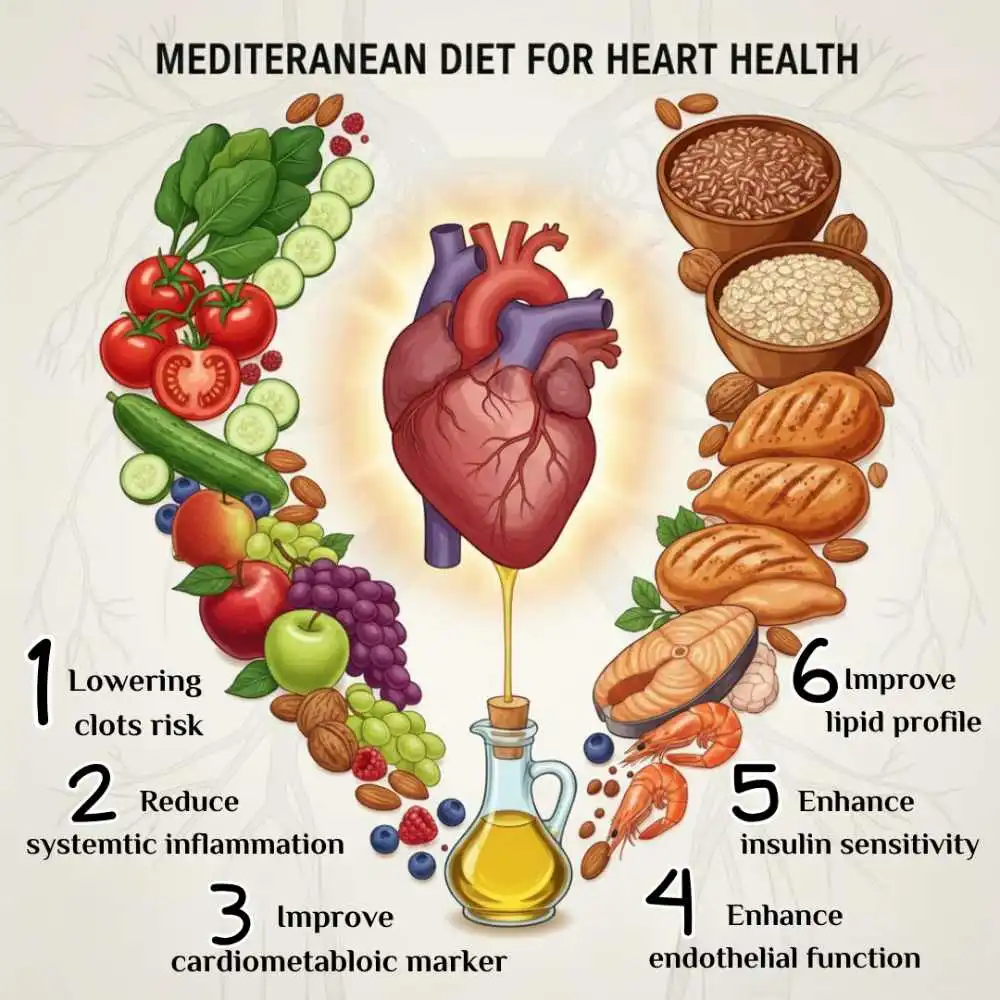
Improves lipid profiles by lowering LDL, triglycerides while raising HDL.
Reduces systemic inflammation, such as C-reactive protein, interleukin-6, and oxidative stress.
Enhances insulin sensitivity and endothelial function.
Bioactive compounds support overall cardiovascular protection.
Improves cardiometabolic markers, such as lowering ApoB and increasing ApoA-I.
And research-supported recommendations suggest the following intake:
Vegetables: 3–9 servings/day
Fruit: 0.5–2 servings/day
Whole grains: 1–13 servings/day
Olive oil: up to 8 servings/day
Typical MD intakes approximately 2200 calories/day, 33 grams of fiber, and 37% fat.
Sample Mediterranean Diet Meal Plan for Beginners
Notably, the Mediterranean diet for heart health is a flexible, nutrient-dense, and sustainable eating pattern supported by strong clinical evidence. Additionally, it has been shown to improve cardiovascular health, reduce diabetes risk, and enhance longevity. Importantly, it is suitable not only for individuals with health concerns but also for healthy people seeking a balanced lifestyle.
Core food groups include:-
Vegetables such as spinach, broccoli, tomatoes, and cucumbers.
Fruits include apples, strawberries, bananas, and grapes.
Nuts and seeds like sunflower seeds, walnuts
Whole grains, such as brown rice, oats, and whole-grain pasta.
Legumes like chickpeas and beans.
Seafood and lean proteins, including shrimp, sardines, tuna, eggs, and poultry.
Healthy fats, especially extra-virgin olive oil.
Moderate dairy, such as cheese and yogurt.
In contrast, certain foods should be limited, including soft drinks, sweets, hot dogs, fast food, refined white pasta, and snacks containing trans fats.
Moreover, water should be the primary daily beverage, while coffee and tea are allowed with minimal sugar.
For example, a beginner-friendly Mediterranean meal plan includes:-
Breakfast: Olive oil omelet with fruits and seeds.
Lunch: Seafood or a tuna sandwich served with salad.
Dinner: Whole-grain sandwich paired with yogurt.
Eventually, after numerous studies, it has been proven that the Mediterranean diet for heart health is highly beneficial. The Mediterranean diet for heart health not only supports cardiovascular wellness but also helps in preventing chronic diseases and maintaining overall vitality. Importantly, it is not necessary to be ill to follow this diet. Anyone can adopt it to improve daily energy, enhance well-being, and support a balanced lifestyle. However, it is recommended to consult a healthcare professional before making any significant dietary changes.
References
Altomare, R., Cacciabaudo, F., Damiano, G., Palumbo, V. D., Gioviale, M. C., Bellavia, M., Tomasello, G., & Lo Monte, A. I. (2013, May 1). The Mediterranean diet: A history of health. Iranian journal of public health. From PubMed
Perfas, S. L. (2025, November 19). Why the Mediterranean Diet Works. Harvard Gazette. From Harvard University
K, G. D. (n.d.). Mediterranean Diet and Cardiovascular Health. Annals of the New York Academy of Sciences. From PubMed
Tosti, V., Bertozzi, B., & Fontana, L. (2018, March 2). Health benefits of the Mediterranean diet: Metabolic and Molecular Mechanisms. The journals of gerontology. Series A, Biological sciences and medical sciences.From PubMed
Rishor-Olney, C. R. (2023, March 27). Mediterranean diet. Stats Pearls [Internet]. From NIH
A, U. I. G. C. [Origin, components, and mechanisms of action of the Mediterranean diet]. Revista medica de Chile. From PubMed
Petkoska, A. T., Ognenoska, V., & Trajkovska-Broach, A. (2025, May 6). Mediterranean diet: From ancient traditions to modern science-a sustainable way towards better health, Wellness, Longevity, and Personalized Nutrition. MDPI. From MDPI
Schwingshackl, L., Morze, J., & Hoffmann, G. (2020a, March). Mediterranean diet and health status: Active ingredients and pharmacological mechanisms. British journal of pharmacology. From PubMed
The Mediterranean diet and Cardiovascular Health | Circulation Research. (n.d.-i).From AHA Journals
A Mediterranean diet lowers blood pressure and improves endothelial function: results from the MedLey randomized intervention (2017, June).From Science Direct
Rees K;Takeda A;Martin N;Ellis L;Wijesekara D;Vepa A;Das A;Hartley L;Stranges S; (n.d.). Mediterranean-style diet for the primary and secondary prevention of cardiovascular disease. The Cochrane database of systematic reviews.From PubMed
Gunnars, K. (2025, April 28). Mediterranean diet 101: Meal plan, benefits, foods, video, and snacks. From Healthline.