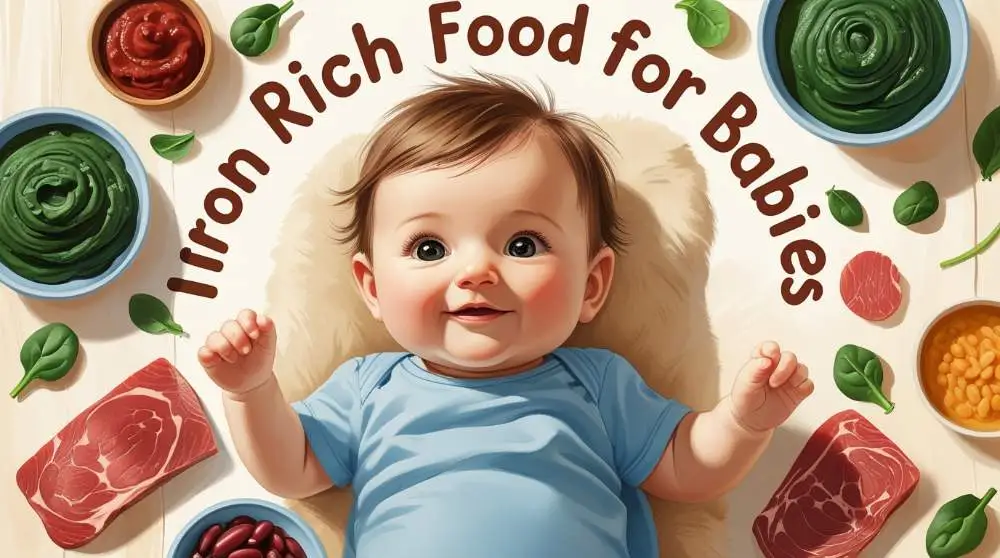
Is your baby looking pale, with a rapid heartbeat, refusing to eat or breastfeed, and constantly falling sick? These could be warning signs of iron deficiency in babies, which affect your baby’s development, energy, and immune system.
Stay calm; you can help your baby naturally by introducing iron-rich foods into their diet. Do you know which foods are packed with iron and why they matter for your little one’s health?
No worries, this guide is designed for you and your baby. Let’s get started and explore how to handle iron deficiency with the right nutrition.
How Do I Know if My Baby Has Iron Deficiency?
Plenty of new mothers are always worried about their baby’s health, whether the baby is feeding well, crying due to illness, or getting the right nutrients for growth. One of the primary concerns is iron deficiency, particularly when pale skin is observed.
Iron is essential for producing hemoglobin, the protein that transports oxygen in blood. Without sufficient iron, babies may become fatigued and develop slowly.
Although babies are born with iron reserves from their mothers during pregnancy and also receive additional iron through breastfeeding, these stores may not always be enough.
The symptoms of iron deficiency in babies may include:
- Paleness.
- Crying more than usual.
- Lack of desire to eat.
- Insufficient weight gain.
- Looking tired.
- Rapid heartbeat.
- Trouble breathing.
- Delayed in both physical and mental development.
If you notice these symptoms, it may be important to consult your pediatrician and consider introducing iron-rich food for babies to support healthy growth.
What Causes Lack of Iron in Babies?
The World Health Organization reports iron deficiency as the leading global cause of anemia, affecting approximately 300 million infants in 2011.
So, there are many reasons that can lead to iron deficiency in babies, including:
- Insufficient dietary iron, especially when breastfeeding continues without introducing iron-rich solid foods.
- Feeding babies cow’s milk before 12 months can increase the risk of iron deficiency, since cow’s milk is naturally a poor source of iron.
- Underlying health disorders such as thalassemia or sickle cell anemia can cause the destruction of red blood cells and a reduction in iron levels.
- Maternal anemia during pregnancy, as mothers with low stores of iron may pass this deficiency to their babies.
- During the period of rapid growth, babies require a higher amount of iron to produce red blood cells.
Related — Everything You Should Know About Iron Deficiency Test
How Do You Test for Iron Deficiency in Babies?
In general, most healthy babies have a sufficient amount of iron in their bodies during the first six months.
Therefore, the examination of iron deficiency begins usually at 6 months, and tests include:
- Complete blood picture(CBC)test for measuring Hemoglobin, hematocrit, the count of red blood cells, white blood cells, and platelets.
- Peripheral blood film is used to examine the abnormality of blood cells under the microscope.
- Serum iron test to assess how much iron is.
- The ferritin test is used to evaluate the iron stores in the body.
Significantly, the American Academy of Pediatrics (AAP) highlights the importance of screening all infants for anemia with a hemoglobin blood test starting at 12 months of age.
Which Foods Are Rich in Iron for Babies?
Many mothers ask, “How can I increase my baby’s iron level?” The answer lies in introducing natural, iron-rich food for babies during the growth stage, which plays a vital role in supporting healthy development, particularly when they start to eat solid food.
Also, iron is of two types as follows:
- Heme iron is found in animal products.
- Non-heme iron is found in plant-based foods.
Therefore, iron-rich food for babies can be classified according to the baby’s age as follows:
Iron Rich Food For Babies 6 Months
Introducing rich food for babies at this age is very important to prevent iron deficiency anemia. The recommended foods include:
- Puréed or mashed beef, chicken, or turkey, which are excellent sources of easily absorbed heme iron.
- Fish like tuna and salmon introduce puréed or mashed.
- Iron-fortified cereals and legumes are good sources of non-heme iron.
- Vitamin C-rich foods, such as oranges and broccoli, can increase the absorption of iron in the body.
Which Foods Are Rich in Iron For 8-month-olds?
At 8 months of age, iron-rich food for babies is required for their nutritional needs and supports development and growth. Recommended options include:
- Red meats and liver, which provide heme iron in a highly absorbable form.
- Spinach served with vitamin C-rich foods, such as strawberries or oranges, to enhance iron absorption.
- Egg yolk which is soft and easy to digest.
- Dried fruits such as apricots, raisins, and figs.
Iron Rich Food For Babies 1 Year
At this stage, you should remove fatty parts of meat from your baby’s meal because these parts contain little iron.
By this age, babies can eat a variety of foods, but it is important to focus on offering iron-rich foods, such as
- Iron fortified infant cereals.
- Minced meat is beef or lamb.
- Hard-boiled yolk.
- Dark leafy greens.
- Seeds like chia seeds which can be mixed with other foods.
- Vitamin C-rich fruits and vegetables, which enhance the absorption of iron.
Related — Top Iron Rich Foods For Kids to Support Healthy Development
Should Babies Take Iron Supplements?
Iron supplements should not be given to children without consulting a doctor، because excess iron can be toxic.
According to the National Library of Medicines, lack of iron during the first 1000 days leads to long-term Neurodevelopment.
The American Academy of Pediatrics, therefore, recommends that breastfed infants start receiving iron supplements at 4 months if breast milk does not provide enough iron. For infants between 6 –12 months, the recommended iron intake is approximately 1 mg/kg of body weight/day.
Ultimately, dear mother, remember that your child needs proper nutrition to grow healthy and strong. Not all foods provide enough vitamins and minerals, so always make sure to offer iron-rich food for babies to boost your child’s energy, strengthen their immunity, and support a healthier and better life.
References
- Iron needs of babies and children. (2007a). Retrieved from PubMed
- Iron. Retrieved from CDC
- The importance of iron in your child’s Diet. From NHS
- Aksu, T., & Ünal, Ş. (2023a). Iron deficiency anemia in infancy, childhood, and adolescence. Retrieved from PubMed
- Jullien, S. (2021). Screening of iron deficiency anemia in early childhood. Retrieved from PubMed
- Iron-deficiency anemia in children. From Stanford Medicine Children’s Health.
- Van Elswyk, M. E., Murray, R. D., & McNeill, S. H. (2021, September 16). Iron-rich complementary foods: Imperative for all infants. Current developments in nutrition. From PubMed